
The hidden heart risk in diabetes & high BP.
If you have type 2 diabetes or high blood pressure, your risk of a heart attack or stroke is 2–4 times higher than the average person — and the earliest warning isn't in your heart, it's in your urine.
Your kidneys know about a heart attack years before your heart does.
Heart disease and kidney disease share the same enemy — damage to tiny blood vessels caused by high sugar and high BP. Because the kidney filters are the most delicate vessels in the body, they show damage first. That damage shows up as albumin in urine — the body's earliest, loudest SOS for cardiovascular risk.
Step 1 — Vessel damage starts
High sugar and high BP slowly injure small blood vessels in the heart, kidneys and brain — long before any symptom or blood-test abnormality.
Step 2 — Kidneys leak first
The damaged kidney filters start letting albumin slip into urine. A uACR > 30 mg/g is a flashing red light: cardiovascular damage is in progress.
Step 3 — Heart events follow
Without action, the same damage hits the heart — heart attack, stroke, heart failure. By that point, the SOS sign in your urine had been on for years.
The hidden risk factors most people miss
If any of these apply, your cardiovascular risk is sharply elevated — and a uACR test will tell you whether the damage has already started.
Type 2 diabetes
Diabetes is the single biggest driver of both kidney disease and cardiovascular events. The two march together.
High blood pressure
Uncontrolled BP damages the heart and kidney filters at the same time — and each makes the other worse.
Albumin in urine
Even a slightly elevated uACR multiplies your risk of heart attack and stroke, independent of cholesterol or BP.
Past stroke or TIA
If you've had any cardiovascular event, the same vascular damage is silently affecting your kidneys.
Family history
Heart disease, stroke, or kidney disease in close family members raises your baseline risk significantly.
Obesity & smoking
Both accelerate damage to the small blood vessels of the heart and kidneys at the same time.
One urine test could change the next 10 years.
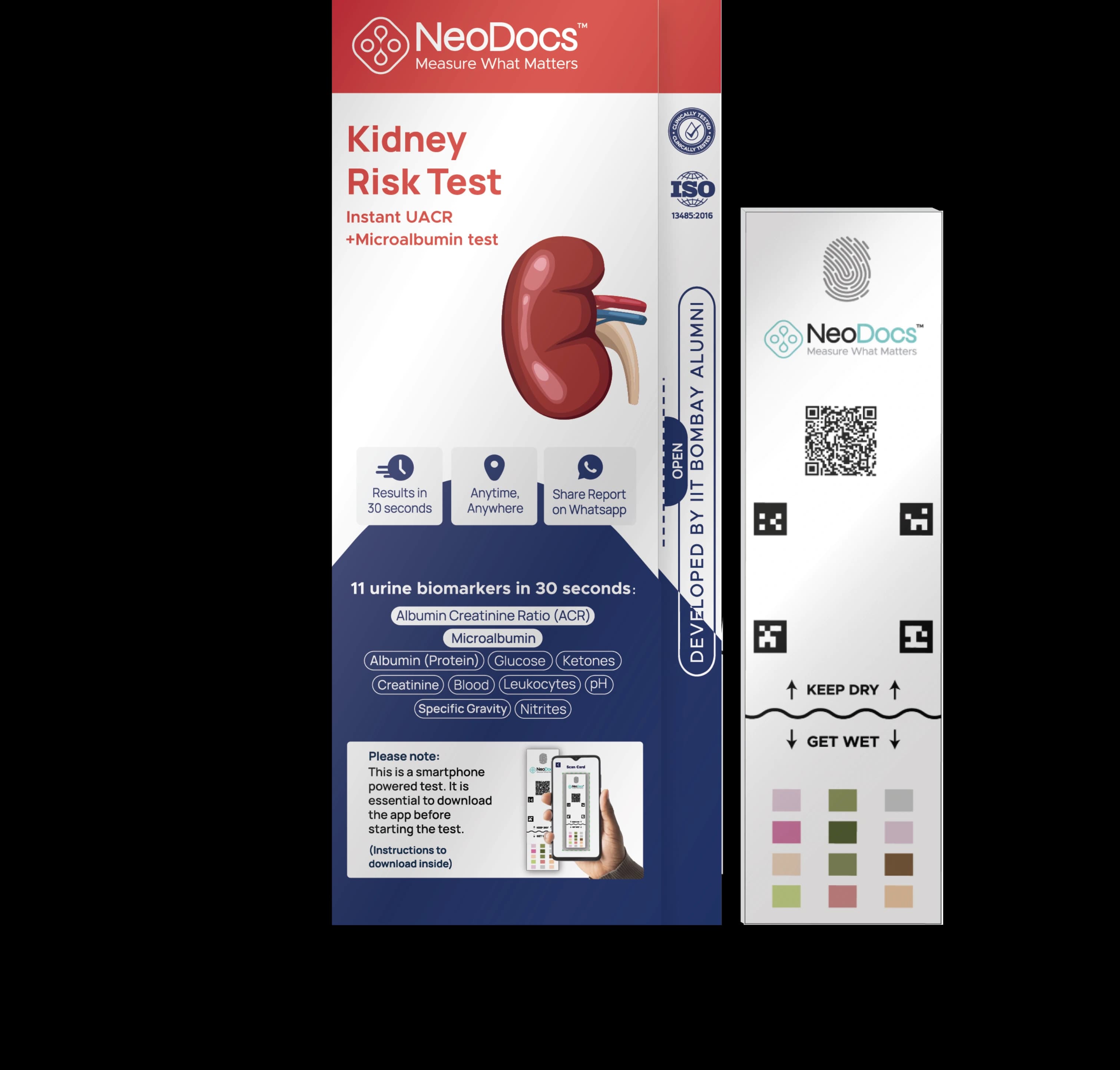
The uACR (Urine Albumin-to-Creatinine Ratio) test is the single most cost-effective way to spot hidden cardiovascular damage early. Done at home, in under a minute, on your phone. If it's normal — peace of mind. If it's elevated — you have time to act, with your doctor, before a heart event.
- Detect cardiovascular risk years before symptoms
- Recommended by ADA, KDIGO, ESC for CV risk assessment
- Trusted by 10,000+ doctors across India
- Clinical-grade accuracy — 99% specificity
The evidence behind the heart-kidney link
Albuminuria is an independent CV risk factor
A meta-analysis of 1.2 million people (Lancet, 2010) showed that elevated uACR predicts heart attack and stroke even after adjusting for cholesterol, BP, smoking and diabetes.
Even normal eGFR + high uACR = high risk
KDIGO data shows that people with preserved kidney function (normal eGFR) but elevated uACR have up to 10× higher cardiovascular mortality than those with normal uACR.
Reducing albuminuria reduces CV events
Trials of SGLT2 inhibitors and ARBs show that lowering uACR translates directly into fewer heart attacks, fewer strokes and fewer heart failure hospitalisations.