
The uACR Urine Test: an early warning for your kidneys.
The uACR (Urine Albumin-to-Creatinine Ratio) test is the most sensitive way to catch Chronic Kidney Disease early — long before any symptoms or before a blood test like eGFR shows anything wrong. No needles, no fasting, done at home with the Neodocs kit.
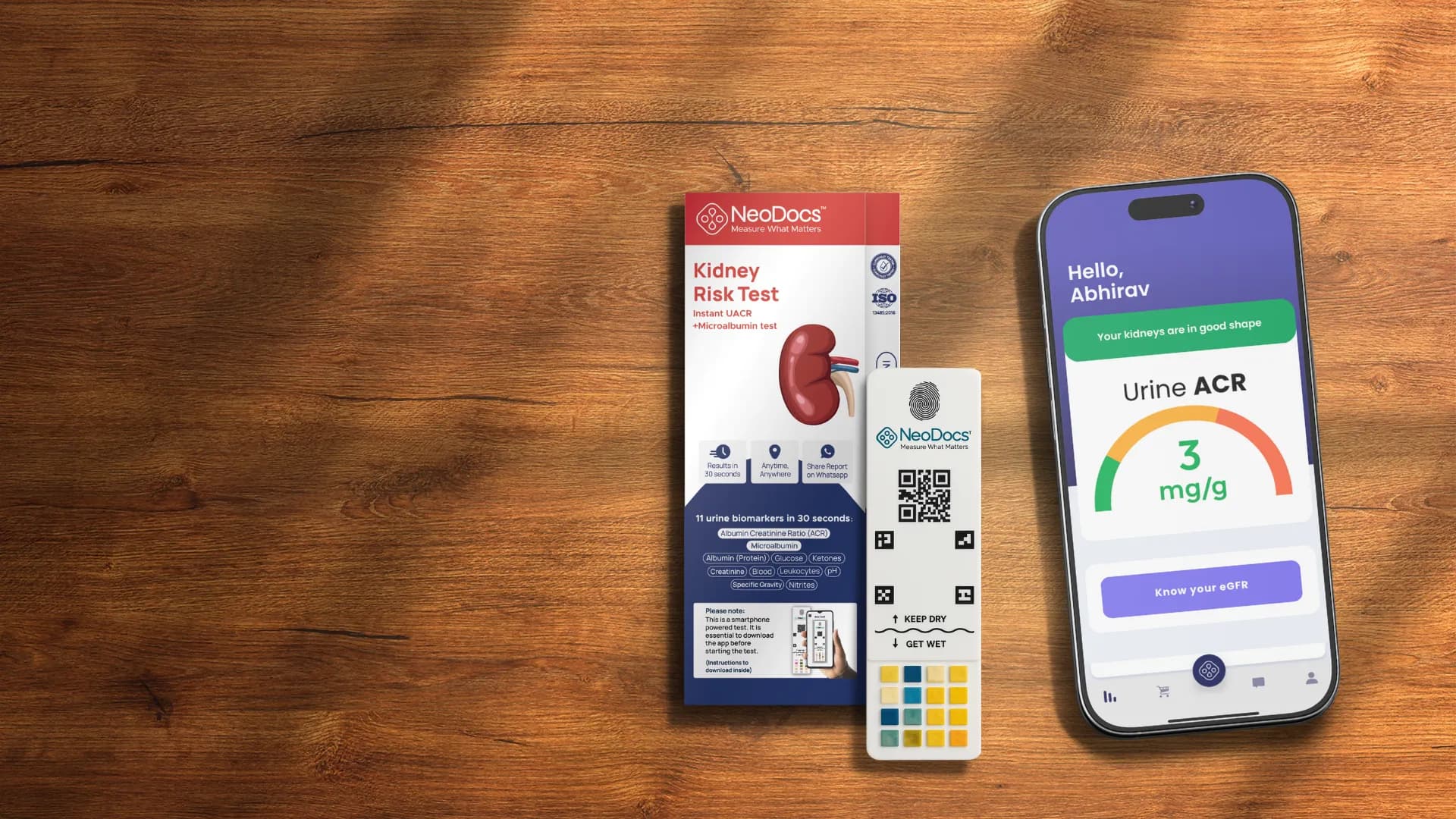
A urine test that catches kidney damage years early.
uACR full form: Urine Albumin-to-Creatinine Ratio. It is a simple urine test that measures the amount of albumin protein leaking into your urine, normalised against creatinine so you do not need a 24-hour sample. Even tiny amounts of albumin are an early signal that the filters in your kidneys are getting damaged.
uACR is the most sensitive test we have for early Chronic Kidney Disease, and is recommended annually by the American Diabetes Association, KDIGO and the European Society of Cardiology for anyone with diabetes or high blood pressure. It is more sensitive than UPCR and more specific than a urine dipstick — and it picks up damage years before a blood test like eGFR turns abnormal.
uACR Normal Range
Values in mg/g (KDIGO classification). For reference only — your Neodocs report explains what your number means and what to do next.
CKD is silent. Until it isn't.
Over 850 million people worldwide live with kidney disease — and 9 out of 10 don't know it. Most are diagnosed only after the damage is already irreversible.
No early symptoms
You can lose up to 90% of kidney function before you feel anything. By the time fatigue, swelling or nausea show up, it is often too late to reverse.
Hits your heart too
Even early albuminuria sharply raises your risk of heart attack and stroke — long before traditional kidney markers like creatinine move. Learn about hidden heart risk →
Early action works
Caught early, CKD is manageable. Diet, blood pressure control and the right medication can stop progression — sometimes completely.
If any of this is you, get tested annually.
These groups carry the highest risk of silent kidney damage and benefit the most from early uACR screening.
Living with type 2 diabetes
Up to 40% of people with diabetes develop kidney disease. Annual uACR screening is recommended by international guidelines.
Have high blood pressure
Hypertension is a leading cause of CKD. uACR catches kidney involvement long before symptoms show up.
Family history of kidney disease
Genetic predisposition increases your risk. Early screening helps catch silent damage in time.
Above the age of 40
Kidney function declines with age. A simple yearly uACR test gives you a reliable baseline to track.
Lab-grade accuracy. Done at home in under a minute.
Order the kit
Get the Neodocs uACR test kit delivered to your door from our online shop.
Dip the test card
Dip the strip in your urine sample at home — no lab visit, no needles, no fasting.
Scan with your phone
Open the Neodocs app and click a photo. Our smartphone-based AI reads the strip in seconds.
Get clinical-grade results
See your uACR value, kidney health status, and what to do next — all in one report.
Built in India. Validated against the world's best.
Neodocs turns your smartphone into a clinical-grade urinalysis lab. Our uACR test has been validated against gold-standard lab analysers, and is trusted by over 10,000 doctors across India.
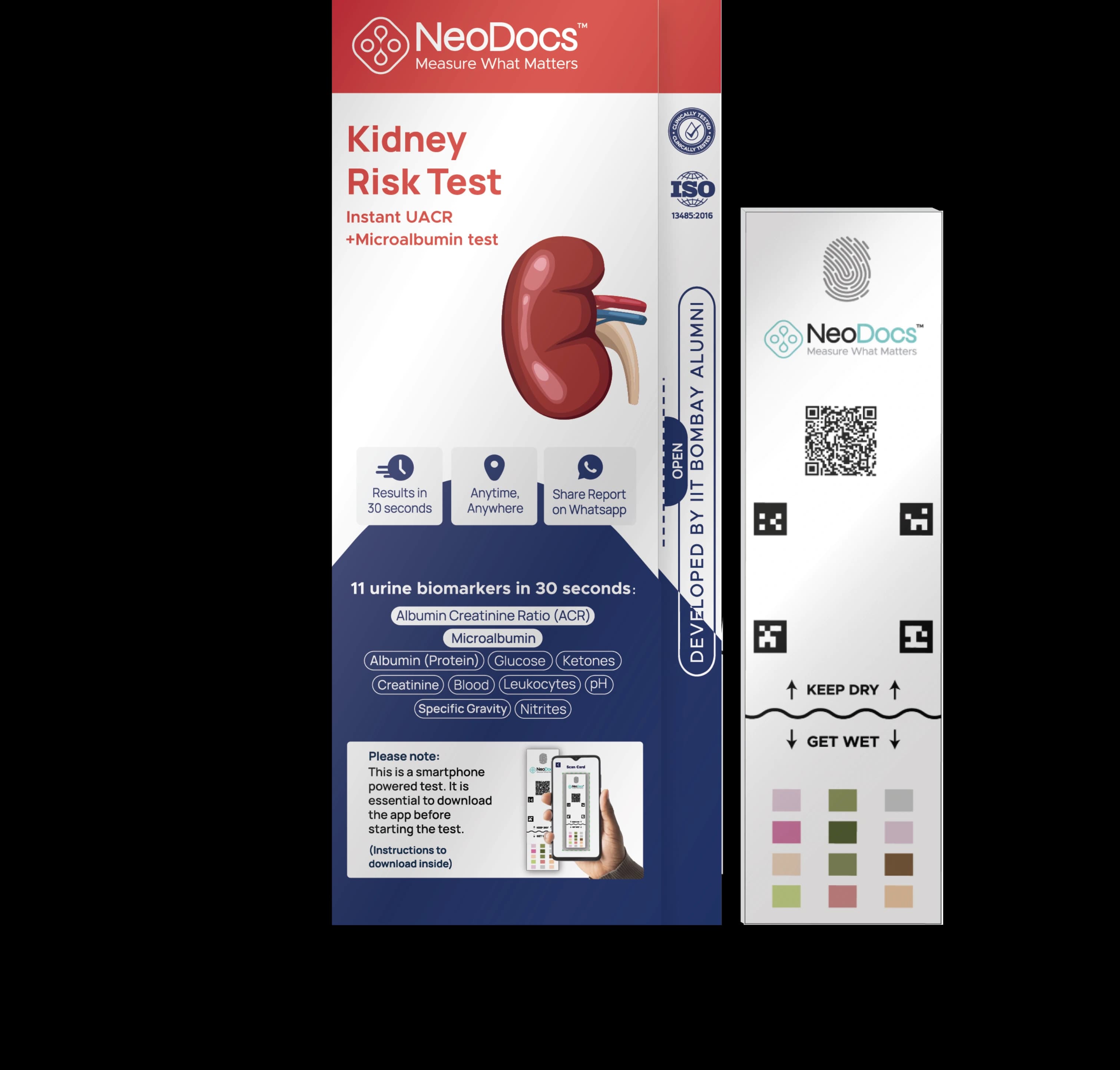
uACR urine test vs eGFR blood test vs UPCR
People often ask: is uACR a urine test or a blood test? How is it different from eGFR or UPCR? Here is the simple answer.
| Test | Sample type | What it measures | Best for |
|---|---|---|---|
| uACR (Urine Albumin-to-Creatinine Ratio) | Urine | Albumin protein leaking into urine | Detecting early kidney damage years before symptoms |
| eGFR (estimated Glomerular Filtration Rate) | Blood | How well kidneys are filtering blood | Tracking how much kidney function is left |
| UPCR (Urine Protein-to-Creatinine Ratio) | Urine | Total protein leaking into urine | Monitoring known kidney disease, less sensitive than uACR |
| Urine dipstick | Urine | Crude detection of large amounts of protein | Misses early albuminuria — not recommended for CKD screening |
ADA, KDIGO and ESC/EASD guidelines all recommend uACR alongside eGFR as the standard annual screening for kidney disease in diabetes and hypertension. uACR is the urine test, eGFR is the blood test — you need both.
Affordable. Done at home. No lab fees.
Lab-based uACR tests in India range from ₹700 to ₹1,100 — and you still need to travel, wait, and book a follow-up to get the result explained. The Neodocs uACR Urine Test Kit gives you the full report on your phone in under a minute.